
How many restrooms does a race need?
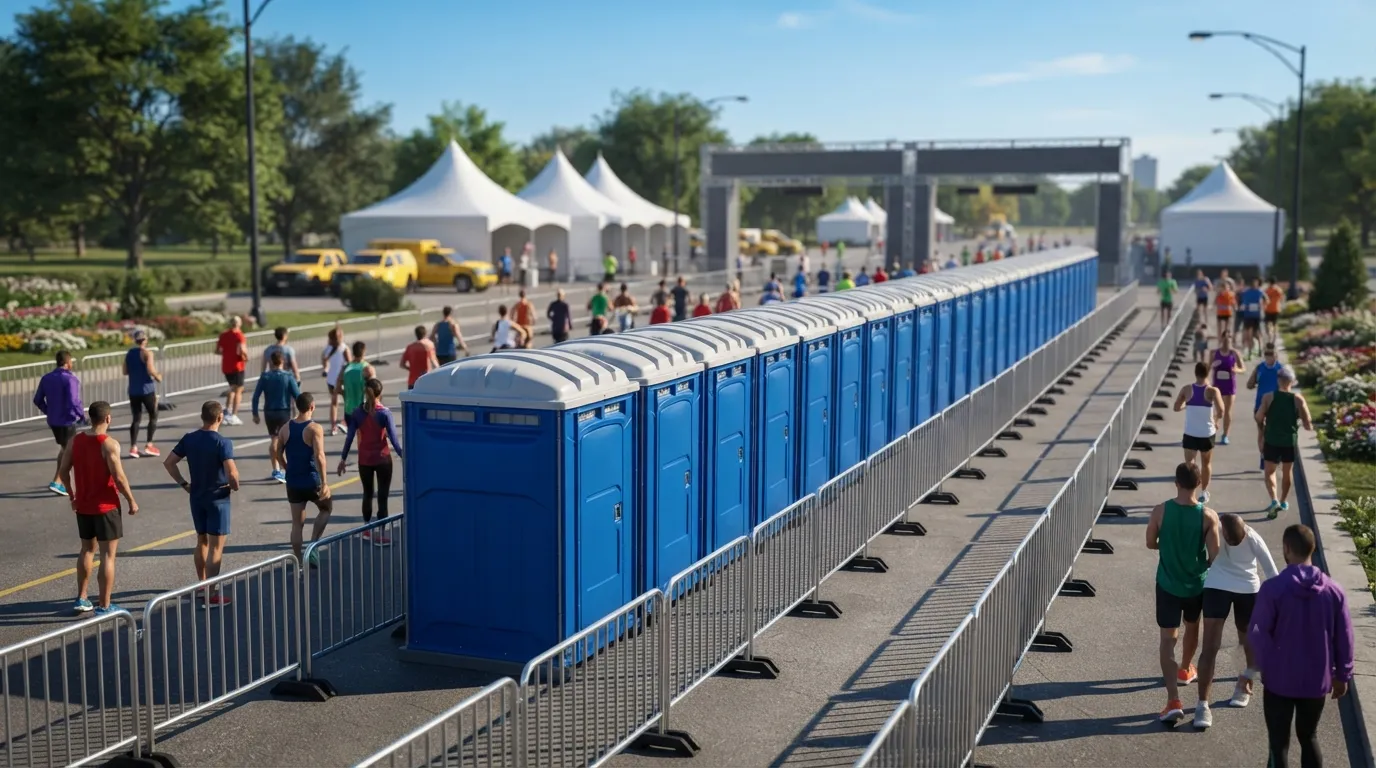
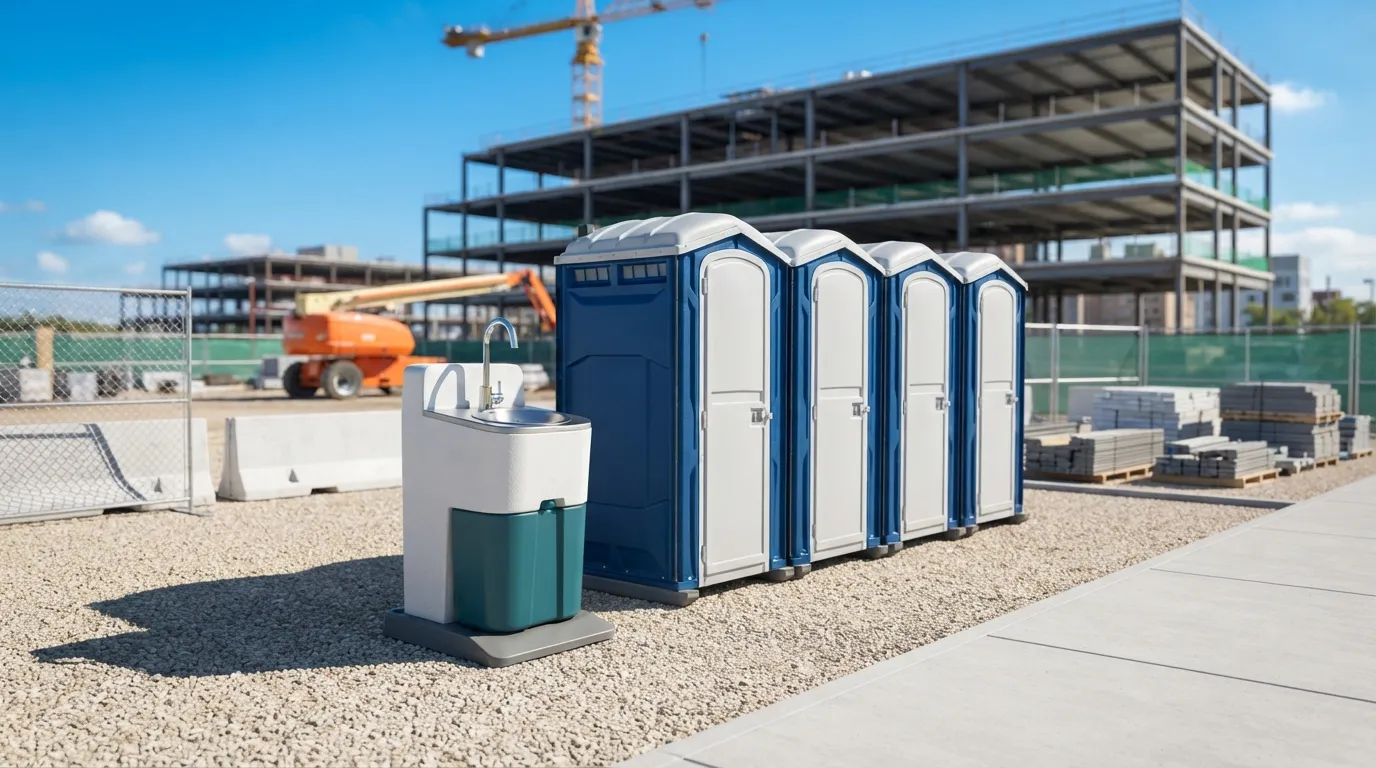
Runner counts drive everything, but course layout matters just as much. A start line with 2,000 runners staged in one corral needs a different cluster than the same field once it spreads across five miles. Mount Pleasant Porta Pros typically stages standard portable toilets at aid stations every two to three miles, then doubles up at the finish, where runners linger. OSHA 1926.51(c) sets construction-site toilet ratios, and while a road race is not a job site, it's a useful benchmark race directors borrow from when nobody else has published one. For fields under 500, a smaller placement plan built from our how many porta potties do I need guide usually covers it. Bigger events, especially anything drawing runners from Sullivan's Island, 5.6 miles southeast, or as far as Summerville, 29 miles northwest, need a written placement plan reviewed before permits go in. At least one unit in every cluster should meet ADA accessible specs. ADA Standards section 213.2 requires 5 percent of clustered single-user units to be accessible, never fewer than one, and each needs a 60 inch turning circle per section 304.3.1. We also stock handwashing stations at every cluster; hand sanitizer alone does not meet 29 CFR 1910.141(d)(2), which calls for soap and towels or a dryer.
What about power for timing tents and lighting?
Race timing equipment, PA systems and finish-line lighting all draw off temporary power, and that means running a pole safely. If you're setting a temporary power pole near the finish line or a timing tent, brace it before you load it. Dig the base deep enough to resist wind and the pull of cables, set the pole plumb, then tamp backfill in layers rather than dumping it all at once. Add a guy wire or a brace kit on the uphill or high-load side if the pole carries floodlights or a speaker stack, and keep the brace clear of the runner lane. GFCI protection matters here too; OSHA 1926.404(b)(1)(ii) requires ground fault interrupters on temporary construction power, and race organizers running generators or shore power should treat timing tents the same way. Pair the pole with a light tower if the race starts before sunrise, which most marathons in Mount Pleasant do. Keep barricades around the base per OSHA 1926.202, which calls for barricades conforming to ANSI D6.1, especially where runners pass close to guy wires.
Should we rent by the day or the weekend?
Most races only need restrooms for the event window, but setup and breakdown eat into that. Renting standard units for a weekend covers Friday delivery through Monday pickup without the day-rate stacking up, and it's the more common choice for Mount Pleasant race weekends with Saturday expos and Sunday runs. Deluxe flushable units cost more but suit VIP or sponsor tents where a nicer restroom matters, and an ADA accessible unit belongs in every cluster regardless of budget. Here's how the standard-unit pricing bands break down:
| Duration | Low | Typical | High |
|---|---|---|---|
| Day | $100 | $150 | $350 |
| Weekend | $125 | $250 | $400 |
| Week | $130 | $200 | $500 |
| Event rate | $200 | $400 | $800 |
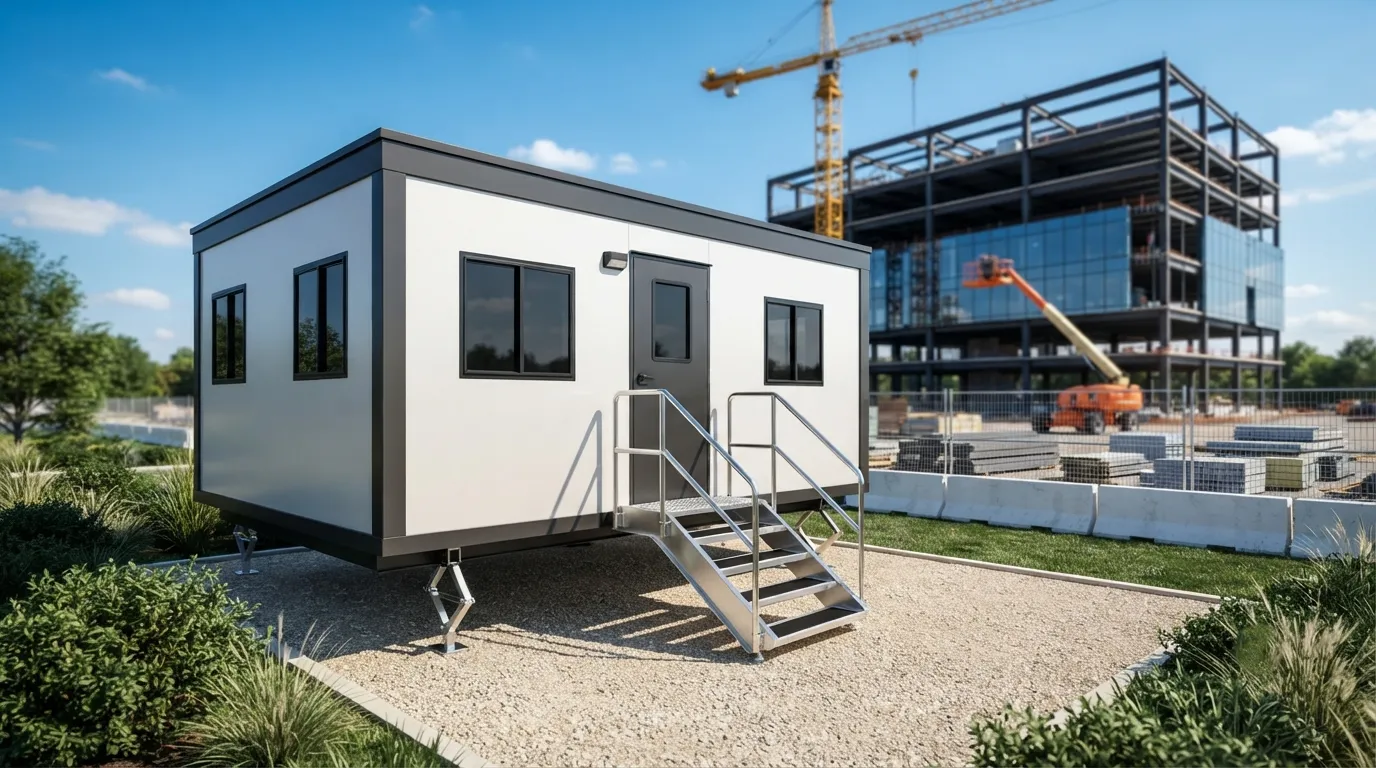
Delivery fees run separately, and a weekend delivery fee typically lands between $125 and $540 depending on distance and cluster count. If your race draws from Hanahan, 15.6 miles northwest, or Goose Creek, 20.2 miles northwest, factor drive time into your delivery window. For big-field events with sponsor villages, a restroom trailer at the finish line handles overflow better than a bank of standard units, and our event restroom rental page walks through layout options for expos and post-race parties.
FAQ
How far in advance should we book race restrooms?
Book as soon as your course map and runner estimate are final, ideally 60 to 90 days out. Big fields competing for the same weekend as other Mount Pleasant events can tie up inventory fast. See our porta potty rental checklist for a full planning timeline.
Do we need permits for restrooms on public streets?
Placement in the public right of way needs confirming with the city before delivery trucks show up. Check current rules through our porta potty permit requirements page, and confirm again closer to race day since routes sometimes shift.
Can we get restrooms delivered before sunrise?
Yes, most marathon deliveries happen the evening before or very early race morning. Pair early delivery with a light tower at staging areas so crews can set up safely before daylight.
How do you brace a temporary power pole for race day?
Dig the base deep, set the pole plumb, tamp backfill in layers, then add a guy wire or brace kit on the side carrying the heaviest load. Keep the brace clear of the runner lane and ring the base with barricades per OSHA 1926.202, which calls for barricades conforming to ANSI D6.1.
What size units work best for aid stations?
Standard units, about 44 by 48 inches on the ground and 92 inches tall, fit tight aid-station footprints without crowding the course. Add a handwashing station beside each cluster for volunteers handling food and drinks.
Do finish-line areas need more restrooms than the course?
Yes, runners linger at the finish far longer than they pause at aid stations. Double your finish-line cluster count compared to mid-course stations, and add at least one deluxe flushable unit for sponsors and VIP guests.
Next step
Get a delivery date
Tell us the address, the dates and the headcount. We size the order and confirm the route.